
This post includes recipe videos, so if you are reading through email, it might help to read online instead.
People often ask about research: how does it happen, what does it look like, and so on. Authors do research some very strange things, so I thought I would share a small snippet of this with you.
The scene: Maggie walks into the kitchen and she is served breakfast. In the original draft, we handwaved this bit, but now it needs to be more fleshed out for plot and character development reasons, which means we need to put something on her plate.
Everyone else has already eaten, because she overslept, so she is getting boiled eggs with smoked fish. We wanted to add some kind of medievalish fantasy pastry.
One of the pastries mentioned in This Kingdom Will Not Kill me is a sambocade. In the world of Rellas, sambocades are more like pies or pierogis, a pocket of delicious dough with sweet filling. The actual sambocades came to us from 14th century England and resembled elderberry cheesecakes with rosewater.
Maggie remarks on this so we decided it would be fun to continue with misnamed desserts.
We want this to be some kind of hearty stuffed pastry, something that can be eaten in the morning and designed to jumpstart your engines for the day.
Search string: names of medieval desserts and pastries.
Google:
Here is a list of prominent medieval desserts and pastries categorized by style:
Pastries and Pies (Tartes and Pasties)
- Tarte de Bry: A baked pastry tart filled with Brie cheese, egg yolks, sugar, saffron, and ginger.
- Darioles: Small, open-faced pastry cups filled with a sweet almond milk custard, minced fruits, and spices.
- Flampoyntes: Pork or fruit pies where the top crust was decorated with pointed triangles of pastry, resembling flames.
- Rastons: A sweet, enriched white bread pastry that was hollowed out, soaked in melted butter, sugar, and rosewater, and baked again.
- Lombard Tarts: Rich pies originating from Northern Italy filled with dried fruits (dates, figs, raisins), marrow, sugar, and wine.
Everything Google spits at you have to be double checked, so you will see me doing separate searches looking for duplicate sources rather than just clicking on links.
Raston sounds intriguing. It’s a cool word. We used a lot of medieval Occitan for Maggie and it has that French but not quite French sound.
Search string: raston.
Google: Raston Dengure (a Zimbabwean-born UK hip-hop/pop artist), Professor Colin Raston (the Australian chemist famous for the “un-boil an egg” vortex fluidic device), or Sir Raston (a Marvel Comics Black Knight character)…
Search string: raston dessert.
Google: Rastons Are Medieval Brede (Bread) Made With Ale & This Recipe Is From An Original 15th Century Recipe (From Harleian Manuscript 279).
Search string: Harleian Manuscript.
Google: Harleian library. The collection comprises 7,660 manuscripts, including 2,200 illuminated manuscripts, [1] more than 14,000 original legal documents; and more than 500 rolls.
Resist the rabbit hole, resist the rabbit hole, willpower activate….
Search String: Harleian Manuscript 279.
Oakden: The medieval manuscript known as ‘Harleian Manuscript number 279′ was written around 1430 A.D. and it has three parts to it. The first part ‘Kalendare de Potages dyvers’ has 153 recipes, the second ‘Kalendare de Lech Mtys’ has 64 recipes and the third ‘Dyverse bake metis’ has 41 recipes. Along with Harleian Manuscript 4016 it is also part of, ‘Two Fifteenth Century Cookery Books’. There is no doubting the French influence (and courtly life) in these recipes, and while the seasoning of each dish is often quite heavy (to modern tastes at least) they are also overly reliant on strong soured flavours. However, there are also many recipes within this list which are very good to eat, and they should be tried out by the modern cook.
The page contains index to manuscripts. Clicking 3 dots on Chrome, clicking on Find, typing in raston…
PAGE 11 » Quyncis or Wardouns in past * Lamprouns y-bake * Lamprays bake * Tartes de chare * Rastons * Darioles * Pyeȝ de pareȝ * Potrous * Flampoyntys bake * Sew trappe * Herbelade * A Bake Mete * A Bake Mete Ryalle * Crustade Ryal * Crustade * Crustade gentyle * Doucettys * Doucettys a-forcyd * Daryoleȝ * Daryoleȝ * Flathons in lente *
Found them. Okay, that is a legitimate dessert.
Image search.
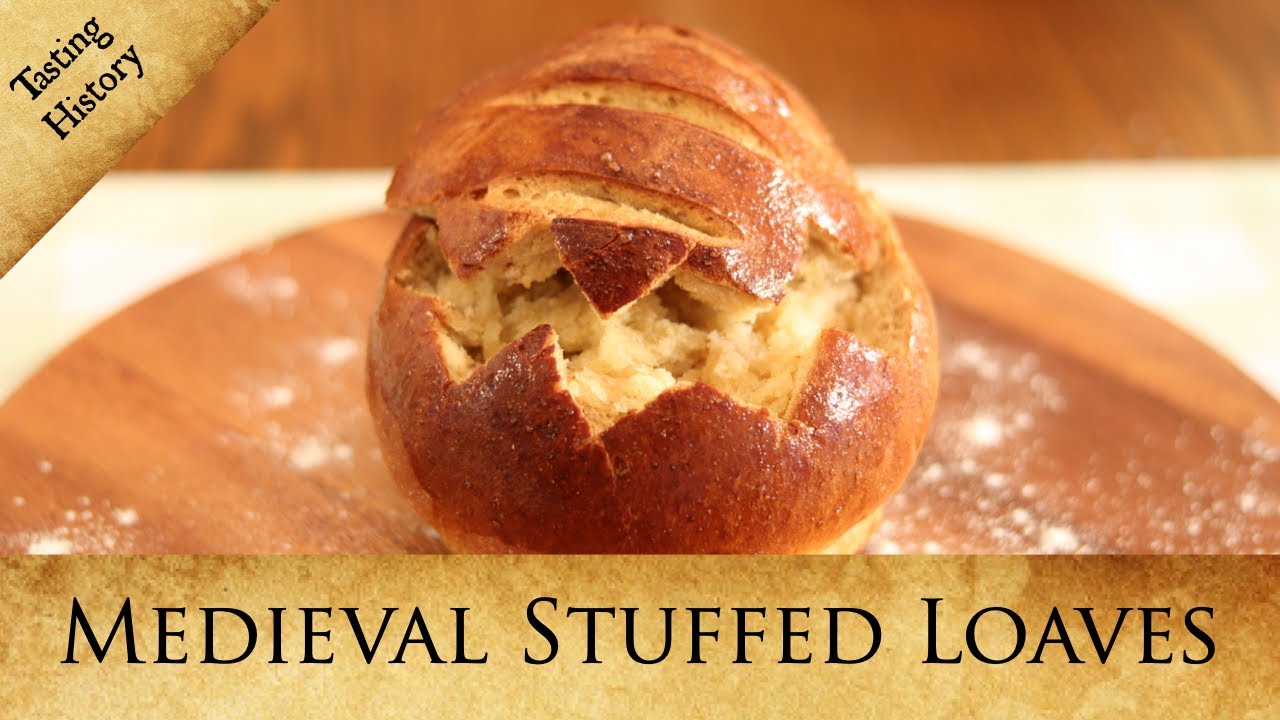
Okay, we can stuff these with things other than butter. What does the recipe look like?
Google AI is throwing a recipe at me, but I do not trust it. However, I do trust Tasting History, because look how pretty their raston is.
So raston is kind of a bread and kind of a pastry, and we are going with that.
MODERN RECIPE INGREDIENTS
- 450g flour (All-Purpose, Whole Wheat or Bread Flour)
- 2 egg whites, 1 egg yolk (plus an optional yolk for an egg wash)
- 2 heaping tablespoons (25g) brown sugar
- 1 cup warm ale
- 1 packet (7g) dry yeast
- 1 stick (113g) butter
- 1 teaspoon salt
Oh, perfect. Nothing super weird, and it uses ale. This will definitely work.
Total search time: about 15 minutes for 1 sentence.
By the way, Tasting History also has this recipe for the authentic sambocades.

These sound super fun and tasty! Might have to try some myself!
Monday first 🥇
I adore Tasting History amd highly endorse their cookbook!
welll my curiosity was activated so i enthusiastically jumped in and wondered if the research made in french would lead somewhere elsr. and it partially did. First there is a soup called rasson ( not medieval at all )but might still try it.
Then there is rastons al petote wich is a grand mother recipe from belgium to make potatoes patties ; its mainly shredded onions potatoes thymes and flour. Not medieval either but probably taste good
And then the same video then here about raston. Oh well.
Me too!
Amazing! Congrats on staying out of the rabbit hole. Thanks for the view into the process. And those do look yummy. 🙂
I’m honestly surprised because, were it me, I would not have the strength to resist!
Honestly, Maggie’s smoked fish and egg breakfast sounded pretty delish too. Better than my fruit and yogurt!
Thanks for the culinary history behind the eats Maggie and company will eat.
From what I read in history books (including cookbooks), a lot of the spices were used to mask the spoilage of food. Unfortunately, there were no such things as iceboxes or refrigerators back then.
According to Max Miller, of Tasting History, that is a commonly held misconception.
Spices were expensive, and if the household could afford the spices, they could afford fresh foods.
*violently curses Victorian historians* Spoiled food makes you sick, it made medieval people sick. Spices were expensive, and they had to travel long distances where their potency reduced. The cookbooks we have are from royal, noble, or at least wealthy, households. Spices were conspicuous consumption (read: more is more). Plus Medieval Europe still relied on humoral theory, and different spices balanced different humors. I taught myself Middle English to read 14th century English cookbooks, and have recreated recipes from ancient, medieval, and renaissance cookbooks. Spices were too expensive to waste disguising spoiled food. They didn’t have refrigerators, but they did have food preservation. If you are interested in how food was preserved before refrigerators, I will happily talk your ear off.
was it salt? was the salt fresh?
We have only the freshest salt!
Ülease talk more about food preservation. Maggie might need it for war rations 🙂
Please talk our ears off, that sounds fascinating!
Yes!!! I second that motion!!!
Love Tasting History!
Education and somewhat tasty things all in the same show!
+1!
I follow tasting history. Fascinating what he decides to try making and the amount of research he puts in to figure out what the recipe actually needs. He’s had some really weird things he’s recreated and then put in his mouth, let me tell you! I’m a very adventurous eater, but there was one that I thought, nooope! I’ve been thinking about his cookbook, might have to get it.
It’s currently in the monthly deals on Amazon.co.uk & Kobo.co.uk (99p). Full price on the US websites, though.
I love this kind of food-related deep dive, but it always leaves me hungry and/or wanting to snack 😂 Might be just me though 😉
THIS is the dedication that makes your books stand out so much! Thank you for sharing a brief insight into the process with us.
I do not know how many times incorrect details in books have thrown me completely out of my reading flow or even kept me from finishing books…🙄 And yes, I am a proud follower of rabbit holes and have a random collection of weird facts in my head.🙈
^^ all of the above ^^
OMG. when they talk about pastry wrapped breakfast stuff, I immediately think of Buck-ee kolaches. the sausage, cheese and jalepeno ones. I ate breakfast and now I want more. The fig one or the pecan ones. OMG.
A new Maggie snippet! I watched the raston segment and I learned something new! Thanks for the cooking lesson. I would never have thought to mix yeast and ale! I wonder what it would taste like in my saffron bread, I don’t do sourdough bread but immediately thought of a starter with it. Ah, the possibilities! The cheesecake sounds interesting too. Thanks for sharing!
Wow, this is amazing!! Thank you for sharing your incredible research. I am dazzled.
I loved the recipes. Here is a another for ideas. A Cornish pasty is a traditional British baked pastry filled with raw minced or diced beef skirt, potato, swede (rutabaga), and onion, all folded into a shortcrust pastry circle and crimped along the edge. The Cornish pasty dates back to the 13th century. Originally, it was an upscale food eaten by royalty and the rich, featuring luxurious fillings like venison, lamb, and seafood. By the 18th and 19th centuries, it evolved into a portable, calorie-dense meal for working-class tin miners. Miners held the pastry by the crimp and discarded it, keeping toxic elements like arsenic off their food.
A cheese and onion pasty from Greggs is still a perfect alternative to a sausage roll.
As someone of Cornish heritage I have to correct you, a proper Cornish pasty never, never, never contains mince meat! Also the skirt, mature turnip (or rutabaga if that’s what your family prefer) and potato should be cut into squares a little thinner than a Scrabble letter, then placed on one half of your shortcrust circle in the order potato, turnip, beef leaving a good margin around the edge.You are aiming to end up with a solid filling that won’t fallout when you eat the pasty. The empty half is then folded over the filling to give you a half-moon shape and the two edges folded over themselves so when cooked you end up with a very thick seam that is sturdy enough to hold the pastry with.
I never realised you were supposed to hold it by the seam – but now I know, it kinda makes sense!
This was fun! I loved the step by step of your research and I love that I’m not the only one to try and resist the rabbit holes!
This was fun! Cooking and baking are special interests of mine, so of course I watched the entire video, and of course now I have to go make a raston. But I think I will add cinnamon and brown sugar to the crumbled interior, because- YUM!
Oooh that would be delicious!
Thank you, Ilona, for the fascinating, chuckle inducing saliva generating (in a good way) peek behind the research curtain!
May your research/edits continue to productively flow with minimal stress….
Sending peace, health and safety to all!
Do you know anyone in the local SCA group (Society for Creative Anachronism) – The Barony of the Stargate? Many members, particularly Laurels and their apprentices, focus on cooking and will have copies of medieval cookbooks, have ‘modernized’ the recipes, tasted them, etc. Some recipes… do not taste good. At all. Others are spectacular. But they may have access to books not easily found through a google search.
OMG the Dariole sounds like a cross between a mince pie and a custard tart. 2 of my favourite sweet snacks 😋
Hmm. So this raston is definitely a bread, not a pastry. Maybe jazz it up with raisins or add cinnamon & sugar to the inside crumbs. Yum!
It all looks delicious, funny how over time commonly used food items change or disappear. My grandmother was from near Budapest and her chicken paprika and apple strudel & polachikin (sp) did not come close to the same taste as the dishes we had in Budapest. Grandma’s was much better.
The spellings you’re after is likely “chicken paprikash” (csirkepaprikás in Hungarian) and “palacsinta” 🙂
Check out Tasting History. He has a recipe as prepared in Dracula. You really can’t go wrong with Max Miller. His research is meticulous. He’s part of my regular You Tube food and cooking rotation. And I’ll throw in Bernadette Banner as well, for historical costume. She’s primarily late Victorian/Edwardian, but has done earlier outfits, including Tudor.
My dad taught me and all 7 of my siblings how to make the . Family dish of chicken and wine sauce*. He told us multiple times that “in Hungary, this is called paprika chicken.” I moved to Austria and lived in Wien for 6-7 years before I tried paprika chicken, and when I did, I was FURIOUS with my husband. “WHY DIDN’T YOU TELL ME THIS EXTREMELY COMMON DISH HERE WAS EXACTLY THE SAME AS MY CHICKEN AND WINE SAUCE?!”
Worse, he ACTIVELY participated in the Family lifetime argument of “should this be served with rice or noodles?” never telling me the traditional (and correct, although not as useful in the U.S.) answer is Spätzle.
He had no answer. In case anyone was wondering how this resolved. It didn’t, really, except that I now make chicken and wine sauce/paprika chicken with spätzle.
___
*and is made 8 different ways in family. Two of my siblings could ONLY make this dish, to the point that the women they married refuse to eat it anymore.
Now two different USians called it that, I have to ask – is the dish really named only “chicken paprika” in the States, the two ingredients 😅? Not “paprikash”?
I’ve always heard paprikash, but my family were all originally from Poland and Croatia and the Germans and Hungarians had major emigrations to Texas. We always ate it with egg noodles as no one wanted to bother making spaetzl.
My mom grew up in the MidAtlantic US in the 40s/50s and called it paprikash. Maybe it depends on how/where you learned the recipe? Her parents were from the Midwest. None of them had any connections with Central Europe within living memory; the recipe may have come out of a book. My mom’s favorite was the I Hate To Cook Book by Peg Bracken. I just checked my Joy of Cooking, a much more widely used book of the period, which does list it as Chicken Paprika.
My husband is half Hungarian and we have visited Hungary twice so far. Everyone on both sides of the pond pronounce it “paprikash”, but of course that’s not unexpected since the US side is hearing it direct from full blooded Hungarians.
I didn’t know/recall that the noodle-ish dumplings were called spätzle, thank you to another commenter for that. The Huns used a what I would call a cheese grater, except it was recessed about a half-inch, with handles on either end that would allow it to form a shelf over the pot of boiling water. The sloppy, stretchy-liquidy dough was spooned into the recessed grater and a triangle-headed tool was used to push the dough back and forth over the holes, forcing the dough through and it would drop into the water as little, shriveled, uneven noodles or dumplings, as the relatives called it. My Hungarian relative gifted me a new triangle-headed tool when I was a young-ish bride. I have never used it for that, but I still keep it in my kitchen drawers and think fondly of it.
Oh no. It wasn’t named that in our family at ALL. It is chicken and wine sauce. We were told if we went to Hungary it would be called chicken paprika.
But it is absolutely called Paprika Huhn here in Wien. Not Paprikash. I’m going to go out on a limb and say Austria is probably the second most authentic place to get it.
As I live in the Pacific Northwest, it is the time of berries (raspberries, blueberries, blackberries, etc.). I am going to try the sambocade! Thanks for exploring the rabbit hole.
Wow…. Thank you for sharing this! I didn’t know about tasting History. I wish I didn’t have to work but I’m on vacation next week so maybe some fun to explore.
I initially misread the blog title as medieval braids, which became even funnier when I got to the part about Harleian Manuscript number 279 because 15 years ago I spent some time redacting Harleian MS 2320 for braid patterns.
What kind of braids? Hair braids?
Fingerloop braids. Originally called lace (ie shoelace). They were used to make ties for lacing garments, hat bands, cords for purses, seal tags for parchments. You can make them round, square, flat, spiral, with holes. The more elaborate ones take two or even three people to make.
Unlike modern plaits, these were made with a loop on each finger rather than individual strands.
An example flat braid.
For to make a brode lace of v bowes: Set ij bowes on B and C ryȝth, and iij bowys on A, B, C lyfte. Þen schal A ryȝth take þorow þe bowe B of þe same hond þe bowe C of þe lyft hond reuersyd. Þen lowe þy lyft bowes. Þen schal A lyfte take þorowout B of þe same hond þe bowe C of þe ryȝth hond reuerced. Þen lowe þy ryȝth bowes, and begynne aȝen.
ABCD refer to your fingers with A being the index and D being the pinky.
I modern English the instructions would be
Place 1 bow on each of ABC left and BC right
A right through B right take C left reversed
Lower left bows
A left through B left take C right reversed
Lower right bows
So the first step would be to use your right index finger (A), which is empty, to pass through the loop held by your right middle finger and pick up the loop on your left index finger from the bottom (reversed – so that it puts a twist in the loop).
These days there are a lot of websites and YouTube videos. Not so much in 2009 when I was using a microfiche copy of the Harleian manuscripts.
arg, that should be left ring finger.
Now I’m on the internet researching finger braids ROFL… I have to get an image of those 🙂 Thanks for the how to .. if I like what I see I may try making some 🙂 I have all this time retired on my hands and I can’t go out because its just tooo HOT for another month or so…
https://loopbraider.com/2011/06/05/5-loop-v-fell-fingerloop-braids-cobbled-together-tutorial-video/
is a good starting point.
love tasting history! and you are the master of the search engine!
Love this behind the scenes look into the process! Ty for sharing
I really adore how much research you do. I’ve said it so many times, but it’s worth repeating. The number of times I’ve been put off a book by something in it that is so blatantly wrong and could have been avoided with a very simple moment on Wikipedia — or even, in a couple cases, the entire premise of a book. And yet you guys make sure your medieval fantasy pastries are not only more complicated than “honeycakes” but also make sure they work. You are incredible.
^This too.^
I am sure I will never fully appreciate how much time you spend to create your work! Wow! But this is why your stories are so much better than the fluff filling up places like Amazon. Thank you for your hard work!
+1 It just blows me away, the levels they go to so it is authentic.
I was reading this and thought to myself “man, someone needs to tell her about the Tasting History Channel because that is the ultimate old recipe rabbit hole and he has a ton of medieval ones” and was delighted to find two of their videos at the end of the post!
Would Gaston eat rastons? You have to ask? Orro’s are to die for.
Oh – lots of fun and very diverting! Sadly I lack the will power to stay out of rabbit holes. Wouldn’t last a day in your chosen occupation. But am always delighted to benefit from your capacities for self-discipline.
Omg I’d be down those rabbit holes so fast. I love this kind of research. Librarians of the BDH assembly!
What hit me about those recipes was that so many had sugar, which was a luxury in midieval Europe. Clearly, the recipes are indeed from the upper classes.
Paper and pens were likely also limited to the upper classes. Everyone else would have to make do with apprenticeships and their grandmother’s knee.
So, of my three nephews, two are fans of Tasting History and have the cookbook(as do I). My sister isn’t as much of a fan since Max doesn’t always use the authentic flour for a region/time period. She was complaining about his recreation of the Pompeii loaves of bread.
😀 I immediately complained that he was using modern ale hehehe. Medieval English ale wouldn’t have been hoppy, like what he used, and it would change the taste completely.
Your sister and I are definitely on the same wave 😀
Her: they would have used buckwheat or Emer flour! Not all-purpose or even whole wheat!
Me:…
She did like the OG recipe for the tiger nut cakes in the cookbook. I personally liked the Romanian garlic sauce he made one October.
You know the first thing I thought of when I started reading the post? What if Maggie was served something that reminded her of a dish described in another author’s book series where an alien was a chef in an inn? 😉
FYI – Amazon Canada has the Kindle edition of Maggie on sale for $6.99. 😱
Not sure why or how long but wow.
Amazon US has the same 6.99 sale … got the ebook yesterday😁
lol, so harrrrrrddddd to resist the rabbit hole, lmao
You had me at desserts!
I like the description for Darioles, I may have to try that.
They all sound very good, can’t wait to read Maggie’s view of the food picked! 😊
Shoot, I end up doing that just for a recipe that *I’m* trying to make (and not caring whether it is medieval or futuristic!) By the time I’m done searching, I’ve had to stop and make dinner, sometimes TWICE. Eventually I’ll cobble together a recipe that is maybe halfway what I started out looking for! This is very easy to do for bread recipes and/or dessert recipes! FWIW, I don’t use google searches anymore. I dispense with any AI answer and try to find the sources faster. NOAIDUCKDUCKGO is pretty good. Starting at King Arthur Flour is another good place to find rabbit holes for recipes. Startpage is another search engine I use. I do a lot of research on herbs and food too. These days I start with *name of herb* and NIH. Of course, that’s like starting at the bottom of the search and working your way back up to breathing air.
Thanks for the insight and the link toe medieval cheesecake! That will save me some time. 🙂 Oddly enough I made stuffed bread (a sausage, onion, mushroom, napa cabbage with seasonings) for lunch today. I still don’t have the breading quite right. This attempt was a yeast/sourdough. I think a potato bread recipe would work better and be fluffier.
You have a whole lot more willpower than I do because I wouldn’t resist the rabbit hole.
I absolutely LOVE Tasting history ! Never had the opportunity to test the recipes but the history parts and the quotes are priceless !
ooooooh, I have tomorrow off… I just have to do dishes today 😅🥺🤣
I love confluence. Max and Tasting History is on my favorite list for youtubers.
When I read TKWNKM, I IMMEDIATELY went there are rewatched the sambocade episode. Am thinking of bribing my granddaughter to make your version with mixed berries.
Just skip it all and put in “bread” or “pastry” into Tasting History. Max has dozens of different things.
I research 15th-17th century quilting patterns, of which many designs come from herbals, bestiary, architecture and woodworking treatises, scrolls and books. I’m always going down rabbit holes. Always loved the herbals the most.
I remember thinking your soap making adventure once posted on this blog would someday make it into a book. So fascinating!
Oooooo, will have to check those quilting patterns out.
Tasting History is AWESOME. Max has a great sense of humor and finds some awesome recipes, like the original cheesecake he made. Yum!
The Authours research, where you find out the truly weir world of elsewhere and then use it. Spent far too much time researching eel fishing and rights thereof. Not an authour, just write for myself. But my hobbies lead me into some interesting places. If you ever want to get a batch of Spinners Weavers and Dyers talking. And then at one point realize they are all very much still alive.
Wow, you read my mind! I was recently wishing you would share Maggie recipes and here they are! I must explore Tasting History further! Thank you!!
Swooning like an anime character. Thank you for this insight and a new rabbit hole to hop into. Going to search and potentially bake some.
I really enjoy r/old_recipes and I bet it would shave 10 minutes off your research time to just ask if anyone has recipes for your specific item…
there is also r/archaiccooking that I just came across, but I can’t vouch for that sub 😀
There is also a Society for Creative Anachronisms ( in two parts) medieval cookbook, called, ” Take a Thousand Eggs or More…” All the recipes are documented as actual, and written up for modern cooking. I’ve done many feasts from these books, and they are quite the great price.
Fascinating; thank you. I love chasing such rabbit holes, and often have to force myself to stop.
I’m now more hungry then I was when I opened my email 😆
Hi, Frenchy here. The Raston is what we call a brioche – probably an old way to do it. The Ale is useful when you need more yeast and it gives a little flavor. 😉
Before I even scrolled down, I was saying “Tasting History” . I have been following him from the start and love both the cooking and history. His reactions are authentic and the recipes are as good as you can get with ancient written accounts. You went to the right place!!
I love Tasting History! I have Max’s book. It’s food porn for me, as I imagine whole meals from past ages.
Tasting History is one of our regular views. Always interesting, even if the food is less than appealing at times. (Hardtack, I’m looking at you!)
I love the details in Maggie’s world. It makes the story rich and authentic, so the time you spend on research is well worth it in my opinion.
Hope the edits/re-writes are going well!
Clack, clack!
“Cast sugar into it … and serve it forth” – this recipe is a winner.
I love tasting history! now i need to revisit his sambocades episode! everytime we finish a section in history i search his site for related videos. we really enjoyed the ancient rome ones last year and the medieval ones. the year before that was a fun deep dive into the civil war. surprisingly it was his episode of the history of ketchup that got me hooked!
Wow.
Also, I love Tasting History.
Thank you for sharing this search for us. This is the kind of post that I save in pdf form because I want to KEEP IT for reference, but I will do it in a couple of day because the app I use also saves comments, and some of those are excellent complements to your post…
I wish I had a button “willpower activate” or “curiosity deactivate”, sigh…
“Add more time to my day” might be another solution…
I love the “willpower activate” or “curiosity deactivate” buttons! I go down so many rabbit holes from curiosity. It’s a good thing that there wasn’t internet when I was in school, or I never would have gotten anything done. 😁
I’m kind of shocked that it seems you didn’t know about Tasting History before this. It seems like the sort of thing you’d adore.
I didn’t know about it until now, and am going to be spending the evening investigating further 😉
I looked up sambocades while I was reading Maggie, and was perplexed when I found cheesecake rather than pastry from every source I could find. Finally, I just mentally filed that under “Fiction”(as in “suspend disbelief here”) and moved on. I love that y’all deliberately misnamed it. It will add more humor when I reread it.
Thank you for the recipes, and, as always, for all that you do for your readers.
Tasting History is awesome! I agree that trusting his recipes is a good choice.
I really enjoyed watching Tasting History! Fascinating. ♥️ Talk about rabbit holes – I need to look for more episodes. 😉
KALAKUKKO! finnish delicacy -small fish like tiny perch with pork fat/bacon, slow baked inside a shell of rye bread. delicious. amazing.
i brought a couple loaves with me when i returned to the states – delicious nostalgia.
Charming video – thanks! How fun to see the history behind the recipes. I am tempted to make them.
wow I really loved this breakdown! So fun to see how the research works. Thanks!
I agree Tasting History is fabulous, keep thinking I want to go to one of his signings as he doesn’t live too far away and does local every once in a while. I am not fond of crowds (loved the 6 foot rule during covid, I really mean I do not like crowds) so have put that off. but maybe one day. tho I really think it would be more fun to sit and have coffee with him and Jose and just chat. now that would be a fun raffle to win, dinner and a bookmark with your favorite Authors. Of course they might hate it, secretly they may be troglodytes or something. not to mention BDH types might be a bit overwhelming even if just one or two, or maybe especially if just one or two. who us? For some reason I’m craving divine apple pie and chocolate mouse.
Very interesting!!! Thanks!
I love tasting history recipes! I had no idea you went into such depth on your research for background authenticity on a made up world!
Argh, the search engine rabbit hole is SO real. I am not even writing anything remotely historical and fastastical (yet: hope springs eternal) but I can spend that amount of time looking at Google Maps and neighborhoods, checking out the types of houses in the area I’m writing about, checking out the fashion choices of MG or high school kids in 2018, the popular names of females born around 1986… I think the author’s drive to constantly research is like a car idling; there’s not NOTHING happening, and at any moment, I can shift and accelerate away. I try not to say I “waste” time, but… yeah. Fifteen minutes for one sentence tracks. Painfully.
I love writing, but no one says narrative is”efficient!”
I’ve followed Tasting History since the very early days-Tuesdays are bookmarked for each new episodes!
“However I do trust Tasting History”.
Darn tootin! His stuff is thoroughly researched, and if you haven’t watched his “worst of the worst” compilation, his facial expressions are priceless!
I have loved the idea of rastons since they were mentioned in a Tamora K Pierce book!
Loved this! Thank you for sharing.
Thank you for sharing this. Max is so fun to watch and so informative.
I do medieval reenactment with the society for Creative Anachronism. we have people that research everything. I have done medieval ottoman and persian foods and pastries. some people do ancient Rome using Apicius I have been down many culinary rabbit holes. you may enjoy Stephans Florigium
https://cunnan.lochac.sca.org/index.php/Stefan%27s_Florilegium
I love Max, this week’s recipe is for a cherry/rose cheesecake. I have made Darioles (Daryoles) several times for feasts. I use a sour cream pastry and the filling is light cream, eggs, salt, a little sugar, saffron, and mace. I also add a little nutmeg grated on top. I use almond extract instead of ground almonds in almond milk because I got complaints about grittiness. (This was before almond milk was readily available in stores). Original recipe was from the Forme of Cury, 1390. BTW, there is no extant period recipe for almond milk in English.
Haha, as soon as you got to “Harleian Manuscript” my brain went “Tasting History”. Absolutely fantastic channel.
I really love Tasting History, he does an excellent job in all the components of his videos.
Cornish Pasty.
https://www.historic-uk.com/CultureUK/The-Cornish-Pasty/
In copper mining regions, Upper Michigan, Minnesota, Arizona they are hearty crusts filled with potato, rutabaga and/or carrots, onions and cheap cuts of meat. baked then wrap and put in lunch boxes. they stayed warm for a long time, could be reheated on shovels over candals or lamps, were hearty and filling and cheap.
Here in the UP we can also get fatayas disguised as pastys. which are crusts filled with stuff. my sister owns a middle eastern restaurant. she makes a “Ruben fataya” with a rye crust, with corned beef, saurkraut, mustard and Swiss cheese…. as well as traditional fataya.
Dumplings and stuffed bread like stuff are a part of every world culture.
Oh damn. Baking + History? Two things in my wheelhouse. Now I need to check out this channel.
Max Miller and Tasting History are excellent sources. Beware of a few less reliable sites that try to copy him.
Another good source on Medieval foods is here: https://madroneculinaryguild.org/wordpress/
Totally nerd-out food history fan girling. Plus the Beauty and the Beast nod! Raston=totally bread. Just sayin’.
I love posts like these, everyone in the comments offers up dozens more rabbit holes to dive into. The Darioles sound good too, time to see what I’d need.